
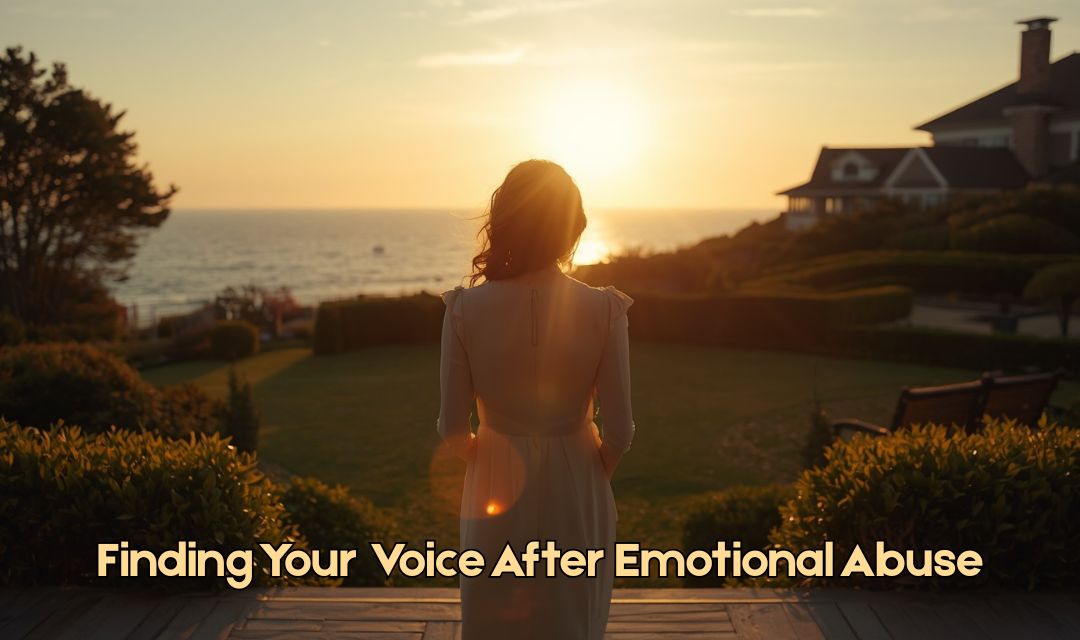
Emotional abuse does not always look like a crisis from the outside. Sometimes it hides behind a polished life, a beautiful home, professional success, family loyalty, or the practiced smile of someone who has learned to survive by staying silent.
That is one of the deepest truths behind Silent Screams from the Hamptons by Christa Jan Ryan. The Hamptons are often seen as a place of ocean air, manicured gardens, wealth, and perfection. The landscapes, gardens, wealth, and success can create an illusion of control, but beneath that illusion there can be silence, trauma, emotional pain, and wounds no one sees.
Emotional abuse recovery begins when a person finally stops asking, “Was it really that bad?” and starts asking, “What did this do to me, and how do I begin to heal?” Emotional healing after abuse is not about pretending the past did not happen. It is about telling the truth, reclaiming your voice, and learning that your pain was never proof of your weakness.
What Is Emotional Abuse?
Emotional abuse is a pattern of behavior that damages a person’s self-worth, confidence, identity, and emotional safety. It may not leave bruises on the skin, but it can leave deep wounds in the mind, heart, and spirit.
Emotional abuse can include constant criticism, humiliation, blame, threats, neglect, control, gaslighting, silent treatment, emotional withdrawal, intimidation, and making someone feel responsible for another person’s anger. Over time, these behaviors train a person to question themselves. They begin to wonder if they are too sensitive, too difficult, too needy, or somehow deserving of the treatment they receive.
That is one of the cruelest parts of emotional abuse: it often convinces the survivor that the wound is their fault.
Signs of Emotional Abuse
The signs of emotional abuse are not always obvious, especially when the abuse happens slowly or comes from someone you love. Many survivors do not recognize the pattern until years later, when they realize how much of themselves they have been giving away just to keep the peace.
Common signs of emotional abuse include:
- Walking on eggshells around someone’s mood
- Feeling afraid to speak honestly
- Constantly second-guessing yourself
- Apologizing even when you did nothing wrong
- Feeling guilty for having needs
- Becoming emotionally exhausted
- People-pleasing to avoid conflict
- Feeling trapped in silence
- Losing confidence in your own memory, feelings, or judgment
- Believing love must be earned through suffering
- Codependency, where your sense of safety or self-worth becomes tied to managing another person’s emotions, addiction, approval, or anger
Codependency is one of the most painful and overlooked signs of emotional abuse. It often develops when a person learns to survive by staying compliant, quiet, useful, agreeable, or emotionally available at all costs. Instead of feeling free to speak honestly, they become responsible for keeping the relationship calm. They may confuse love with rescuing, loyalty with silence, and sacrifice with self-worth.
This creates a natural connection to The Compliant Cowgirl. The word “compliant” reflects the emotional training many survivors experience: learning to please, perform, stay silent, and avoid conflict in order to feel accepted or safe. But healing begins when compliance gives way to truth, boundaries, and the courage to reclaim one’s own voice.
Long-Term Effects of Emotional Abuse
Emotional abuse can follow a person long after the abusive moment has passed. It can shape how they love, work, parent, trust, speak, and see themselves.
Long-term effects may include low self-esteem, anxiety, depression, trust issues, fear of conflict, poor boundaries, unhealthy relationship patterns, emotional numbness, and disconnection from self. Some survivors become overachievers because success feels like protection. Others become caretakers because keeping everyone else calm once felt like survival. Some chase love from people who repeat the same wounds they knew in childhood.
This is why emotional abuse recovery requires more than “moving on.” Survivors are not only healing from what happened. They are healing from what they had to become in order to survive it.
Emotional Abuse and Childhood Trauma
Emotional abuse often begins in childhood homes shaped by addiction, domestic instability, fear, denial, and silence. A child may grow up watching adults rage, drink, disappear emotionally, blame others, or pretend everything is fine in public while chaos rules behind closed doors.
In Silent Screams from the Hamptons, Christa Jan Ryan explores the painful inheritance of family dysfunction: how addiction, domestic violence, emotional chaos, and unspoken trauma can pass from one generation to the next. The memoir does not treat trauma as an abstract idea. It shows how a child learns to survive, how silence becomes a shield, and how adulthood can repeat what childhood never healed.
The heart of the story is not only pain. It is identity, faith, recovery, self-worth, and the courage to break patterns that once felt impossible to escape.
Emotional Healing After Abuse Begins with Truth
Emotional healing after abuse begins with truth. Not dramatic truth. Not polished truth. Real truth.
It begins when you stop minimizing what happened. It begins when you stop saying, “Other people had it worse.” It begins when you stop protecting the people who hurt you at the expense of your own peace. It begins when you name the abuse, validate your feelings, and accept that your pain matters.
For many survivors, the hardest sentence is not “I was hurt.” It is “I did not deserve it.”
Truth breaks the spell of silence. It gives language to the wound. And once the wound has language, healing has somewhere to begin.
Steps to Heal from Emotional Abuse
Healing from emotional abuse is not a straight line. It is a process of returning to yourself, one honest step at a time.
- Recognize the abuse.
Name the pattern for what it was. Emotional abuse is not normal conflict. It is repeated harm that weakens your sense of safety and self-worth. - Stop blaming yourself.
Abuse is never caused by your sensitivity, your needs, your voice, or your desire to be loved. The responsibility belongs to the person who chose to harm, control, humiliate, or dismiss you. - Set healthy boundaries.
Boundaries are not cruelty. They are protection. They teach your nervous system that peace is allowed. - Seek therapy or support.
Healing often requires safe people who can help you process what happened without judgment. - Rebuild self-worth.
Start small. Keep promises to yourself. Speak kindly to yourself. Notice when you abandon your own needs to earn approval. - Break generational patterns.
The cycle can stop with you. What was handed to you does not have to be handed through you.
This is the message that runs through Silent Screams from the Hamptons: healing is possible, but it asks for courage, honesty, and the willingness to stop living as though silence is safety.
The Role of Therapy in Emotional Abuse Recovery
Therapy can be an important part of emotional abuse recovery because trauma often lives beneath logic. You may know something was wrong and still feel guilty. You may know you are safe and still feel anxious. You may know the relationship was harmful and still miss the person who hurt you.
A trauma-informed therapist can help survivors process painful memories, understand triggers, rebuild confidence, and create healthier relationship patterns. Support groups, recovery programs, and faith-based counseling can also help survivors feel less alone. The right support does not rush healing. It creates a safe place where your story can finally breathe.
For anyone currently unsafe, professional support and domestic violence resources should be contacted carefully and privately. If there is immediate danger, call emergency services. If you are in the United States and need confidential support, the National Domestic Violence Hotline is available 24/7.
Why Memoirs Like Silent Screams from the Hamptons Help Survivors Feel Seen
Memoirs can do something clinical language cannot always do. They can sit beside the reader and say, “You are not crazy. This happened. It mattered.”
Silent Screams from the Hamptons gives voice to hidden wounds: childhood trauma, addiction, family pain, domestic chaos, codependency, self-doubt, survival, and the long road back to truth. It reminds readers that abuse can exist in families that look respectable, in communities that look beautiful, and in lives that appear successful from the outside.
For survivors, that recognition can be powerful. A memoir does not replace therapy, but it can open the door. It can help someone see their own story more clearly. It can turn private shame into shared humanity.
Healing Does Not Mean Forgetting
Healing does not mean pretending the past was harmless. It does not mean excusing abuse, rewriting history, or forcing forgiveness before you are ready.
Healing means the past no longer gets to control your identity, choices, relationships, or future. It means you can remember what happened without letting it define your worth. It means you can carry wisdom instead of shame.
Some scars remain. But scars are not proof that you are broken. They are proof that something tried to break you and did not finish the job.
Signs You Are Recovering from Emotional Abuse
Emotional abuse recovery often begins quietly. It may not look dramatic at first. It may look like peace.
Signs you are recovering include:
- You trust your feelings more often
- You set boundaries without overexplaining
- You recognize unhealthy patterns sooner
- You speak honestly, even when your voice shakes
- You stop taking responsibility for other people’s cruelty
- You begin releasing codependent patterns
- You feel safer in your own body and mind
- You allow yourself to rest
- You believe you are worthy of love without earning it through pain
Recovery is not perfection. It is returning to yourself after years of being trained to leave yourself behind.
Final Thoughts
Emotional abuse can shape a person deeply. It can silence their voice, distort their identity, and teach them to confuse chaos with love. It can also train a person into codependency, compliance, and emotional survival.
But emotional abuse does not get the final word.
Healing is possible. Truth is possible. Peace is possible.
Silent Screams from the Hamptons is a story of trauma, addiction, faith, recovery, and finding the courage to speak after years of silence. It is for anyone who has carried pain behind a composed face. It is for anyone trying to break a cycle they did not create. And it is for anyone who needs to hear this simple, life-giving truth:
Your voice still belongs to you.